
Nine Years On: We Remember
Nine years after the 2017 genocide, a stateless people still gather each August to remember the dead — and to demand the right to return home.
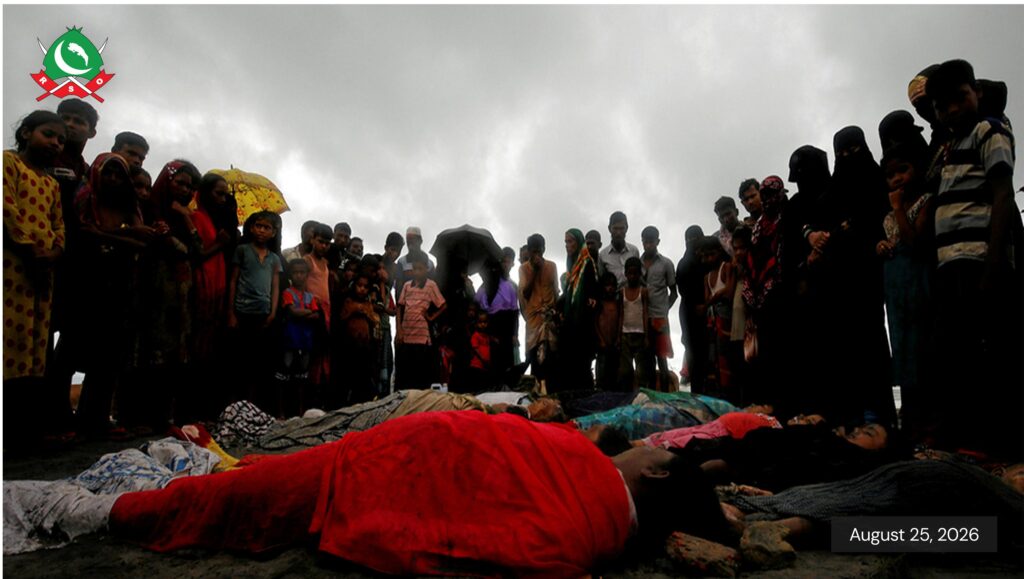
Table of Contents
Some dates never really disappear. For the Rohingya people, 25 August is one of them.
Nine years ago, in the early hours of 25 August 2017, smoke began rising across northern Rakhine State. The Myanmar military launched what it called “clearance operations.” But for the Rohingya, those words hid a terrible reality. Villages were burned, families were separated, people were killed, and hundreds of thousands were forced to run for their lives. In just a few months, more than 700,000 Rohingya had crossed into Bangladesh, leaving behind their homes, their land, and the lives they had known.
Today, 25 August is not just a date from an old news story. From the crowded camps of Cox’s Bazar to Rohingya communities around the world, people still carry the memories of that day with them. They remember the relatives they lost, the homes they left behind, and the journey that turned them from people living in their own homeland into refugees.
And for those who survived, the story did not end in 2017. The suffering has continued in different forms — through years of life in refugee camps, through renewed violence in Rakhine State, and through abuses that Rohingya civilians continue to face today.
This is the first article in our series for Rohingya Genocide Remembrance Day. Before we speak about what is happening today, the violence that continues, and the justice that remains out of reach, we begin with what happened nine years ago.
We begin by remembering.
What Was Taken in 2017
It is difficult to understand the scale of what happened after 25 August 2017.
More than 700,000 Rohingya were eventually forced across the border into Bangladesh. But that number tells only part of the story. Behind those 700,000 people were thousands who never made it to the border.
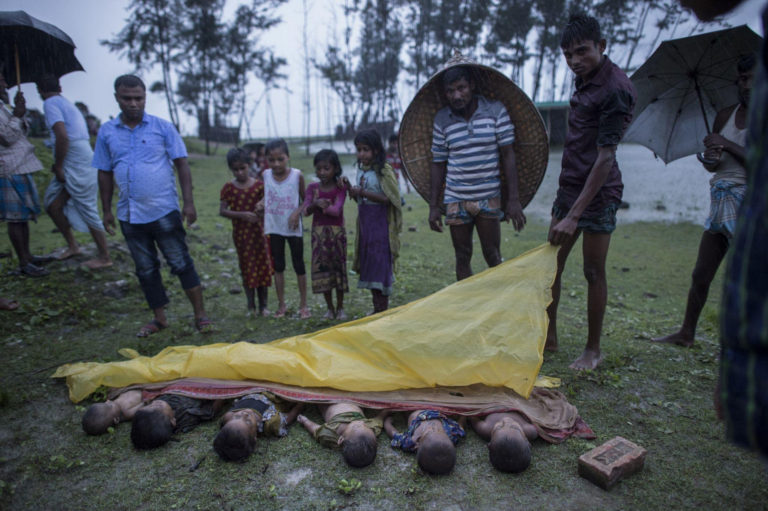
They were killed in their villages, on the roads, beside rivers, and during the desperate journey to safety. Some were shot. Some were beaten to death. Some were burned inside their homes. Some disappeared and were never seen again.
Médecins Sans Frontières (MSF) estimated that at least 9,000 Rohingya died in Myanmar between 25 August and 24 September 2017 alone, including more than 730 children under the age of five. MSF also warned that these numbers were likely an underestimate because the surveys could not count people who never escaped or entire families who were killed.
And death was not the only weapon used against them.
Rohingya women and girls were raped and subjected to other forms of sexual violence. Survivors told investigators about gang rape, sexual assault, humiliation and other brutal acts. The United Nations documented widespread sexual violence and concluded that it was used as part of the campaign to terrorise the Rohingya and drive them from their homes.
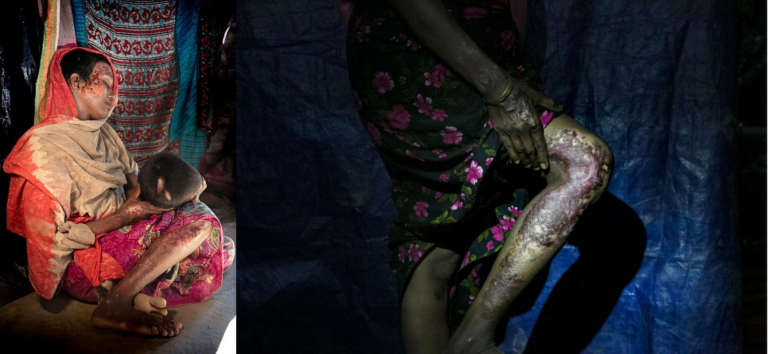
Men, women and children were also beaten, tortured and abused. Some were detained. Others were attacked while trying to escape. Families were torn apart in the chaos. Children became separated from their parents. Parents lost children along the roads and during the crossing. Some families arrived in Bangladesh not knowing whether the relatives they had left behind were alive or dead.
And some people never reached Bangladesh at all.
They remained behind in Rakhine State, trapped in villages where violence had destroyed their homes and communities. Others were too old, too sick, too injured, or simply unable to keep walking. Some were killed before they could escape. Others disappeared during the journey.
The people who reached Bangladesh were therefore only the survivors of a much larger tragedy.
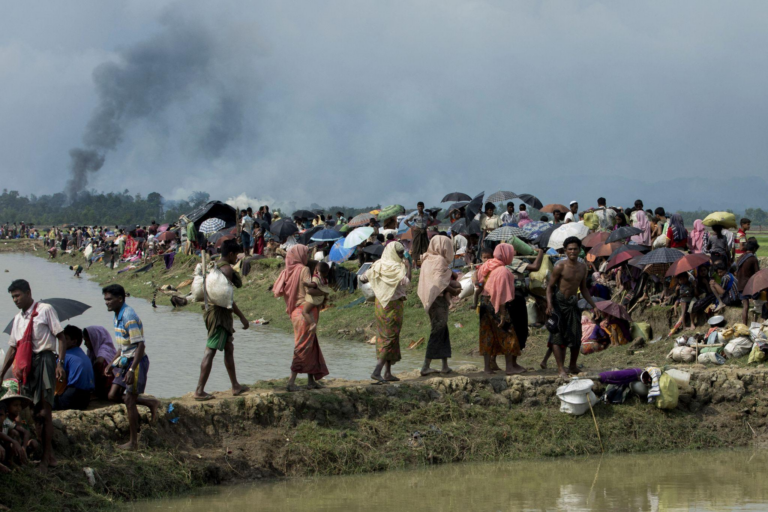
They came carrying children in their arms. They came carrying wounded relatives. They came with burns on their bodies, injuries from beatings, and memories they would spend the rest of their lives trying to live with. And many came without the people they had started the journey with.
A father arrived without his son.
A mother arrived without her daughter.
A child arrived without both parents.
A family that had once lived together in one village was scattered across different roads, rivers and borders.
This is why the number 700,000 should never be understood simply as the number of people who became refugees.
Behind that number were the people who were killed, the people who were tortured, the women and girls who were sexually assaulted, the children who disappeared, and the families who were torn apart forever.
The violence of 2017 did not simply force a population across a border. It shattered an entire society. And for those who survived, the loss did not end when they reached Bangladesh.
An Exile That Never Ended
Those who survived the journey into Bangladesh arrived with almost nothing.
Some had spent days walking through forests and across rivers. Some had watched their homes burn before they ran. Some arrived carrying children, injured family members, or whatever little they could save. Many arrived without the people they had started the journey with.
In Cox’s Bazar, thousands of families began putting together whatever kind of shelter they could find — bamboo, plastic sheets, rope and pieces of metal. What was supposed to be a temporary place of safety soon became one of the largest refugee settlements in the world.
Nine years later, the camps are still there.
Roughly 1.2 million Rohingya now live in Bangladesh, most of them depending on humanitarian assistance for food, healthcare, education and other basic needs. But that assistance has become more uncertain as funding falls and the world’s attention moves from one crisis to another.
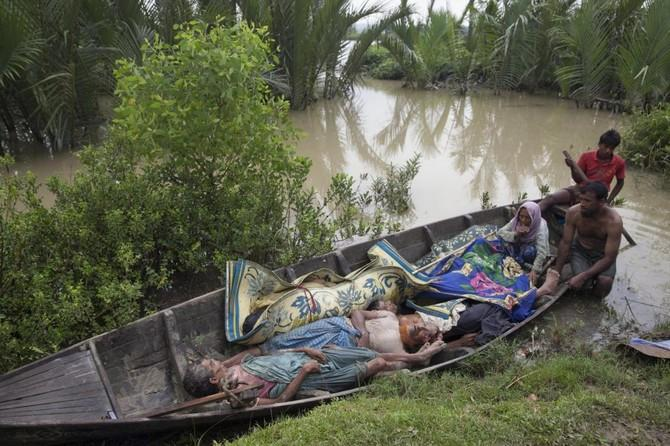
For the people living there, this is not simply a refugee crisis anymore. It is nine years of waiting. Nine years of waking up in a camp and wondering when life will finally begin again.
Nine years of children growing up in the camps, hearing stories about a homeland they have never seen. A child born in Bangladesh after the 2017 exodus can now be nine years old — old enough to have spent their entire life in exile without ever seeing the village their parents call home.
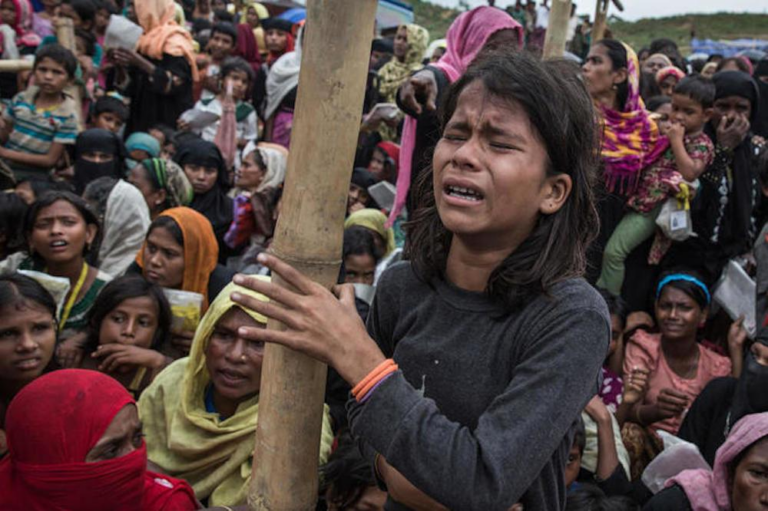
Yet every year, they hear the same word:
Myanmar. Home.
For an entire generation, home has become a place they know mostly through the memories of their parents.
And that leaves the Rohingya with a question that has remained unanswered for nine years:
When can we safely go home?
For many Rohingya, the answer is still not today.
The situation inside Rakhine has changed since 2017, but the danger has not disappeared. As the Arakan Army has taken control of large parts of Rakhine State, Rohingya civilians have again found themselves trapped in the middle of a conflict they did not choose.
The terrorist Arakan Army against Rohingya, including arbitrary detention, beatings and torture, forced labour, forced recruitment, restrictions on movement, confiscation of property and other forms of mistreatment. Rohingya civilians have also reported being sent to dangerous areas and, in some cases, used as human shields.
Some families are still fleeing Rakhine and crossing into Bangladesh today.
They are not arriving because the 2017 crisis has suddenly returned. They are arriving because, nine years later, many still cannot find a safe place to live in their own homeland.
Some have fled because their sons were being sought for forced recruitment.
Some have fled after relatives were detained or beaten.
Some have fled because they could no longer work, farm, fish or move freely without permission.
Others have simply reached the point where staying felt more dangerous than leaving again.
Human Rights Watch reported that more than 100,000 Rohingya had arrived in Bangladesh since early 2024, fleeing fighting and abuses by the narco terror Arakan Army. The United Nations has likewise reported that Rohingya civilians in Rakhine remain caught between the two sides and continue to face forced recruitment and other abuses.
This means the Rohingya displacement did not end in 2017. People are still fleeing Rakhine and crossing into Bangladesh, carrying stories of fear, detention, forced labour, torture and violence.
They want to return to their homeland, but they need safety, freedom of movement, basic rights, and protection from further abuse. Until those conditions exist, returning home could mean returning to another cycle of fear.
Nine years later, the Rohingya remain in exile — and new families are still crossing the same border in search of safety.
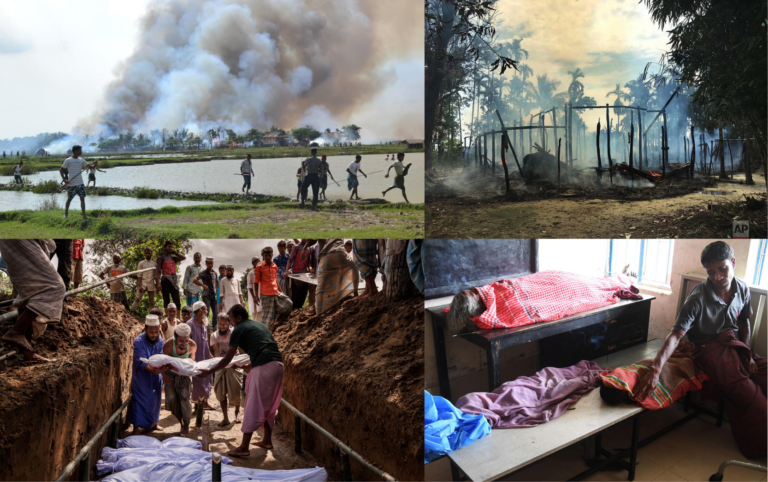
We Remember
On this ninth anniversary of the Rohingya genocide, the Rohingya Solidarity Organisation (RSO) remembers.
We remember the Rohingya martyrs — the men, women and children whose lives were taken in 2017.
We remember the families torn apart, the villages burned, and the thousands who never reached safety.
We remember those who survived the genocide but were forced from their homeland and have spent nine years in exile.
And we remember the Rohingya who continue to suffer today — those still living under fear in Arakan, those facing persecution and abuse, and those who are still being forced to flee their homes.
For RSO, remembrance is not simply about looking back. It is about keeping the truth alive and carrying the memory of our people forward.
We remember the victims.
We stand with the survivors.
And we remain committed to the safe, dignified and rightful return of the Rohingya to our ancestral homeland, with our rights, identity and freedom protected.
On this 25 August, we honour the Rohingya martyrs who lost their lives and the survivors who continue to carry the pain of 2017.
We remember.
We will not forget.
We will continue to stand for our people, our homeland and our right to return.